
Discipline that holds up at the CCMA
What gets tested at the CCMA is rarely whether the person did it. It is whether you followed a fair procedure, and whether the earlier warning you relied on was still in force. LetterUp keeps both on a timeline you can print.
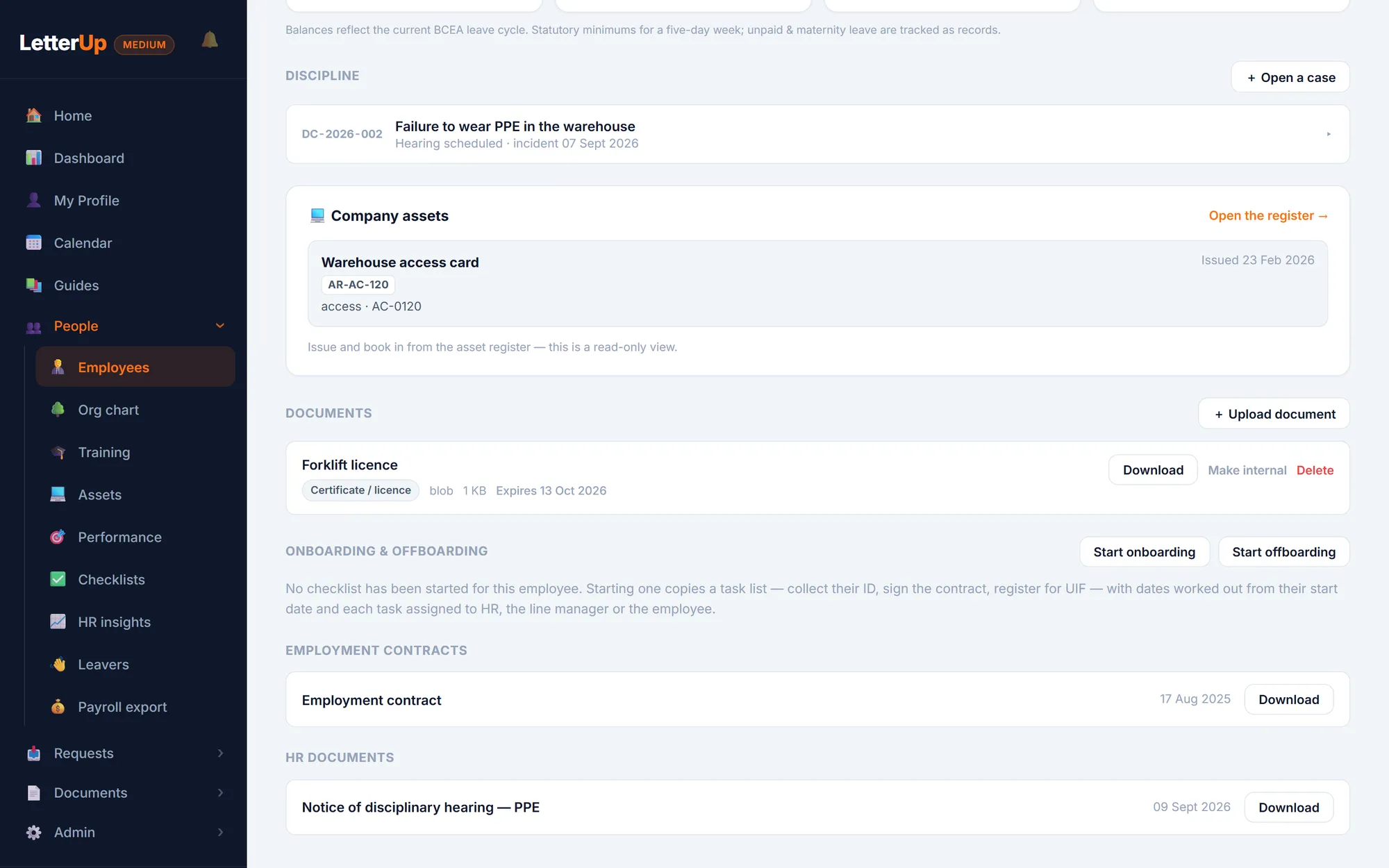
Six steps, in the order the Code puts them
Open the case
The allegation, the incident date and the employee. It gets a reference like DC-2026-002, which is short enough to read out in a hearing.
Notice of hearing
Drafted from the case, with the allegation, the date and place, and the rights to representation, to call witnesses and to an interpreter. Send it for signature and the signature is your proof of receipt.
The hearing
The chairperson, venue and time are recorded, a reminder goes out the day before, and notes land on the timeline as they are taken.
Outcome and sanction
Upheld, not upheld, or withdrawn. Sanctions run from counselling through to dismissal, and the validity period comes from your own disciplinary code.
The letter
The sanction offers the matching letter, whether that is a written warning, a final written warning, a suspension or an outcome. It arrives pre-filled and is filed against the case.
Appeal
Lodged, upheld or dismissed, with notes. The case stays open until somebody closes it deliberately, and the timeline is your evidence.
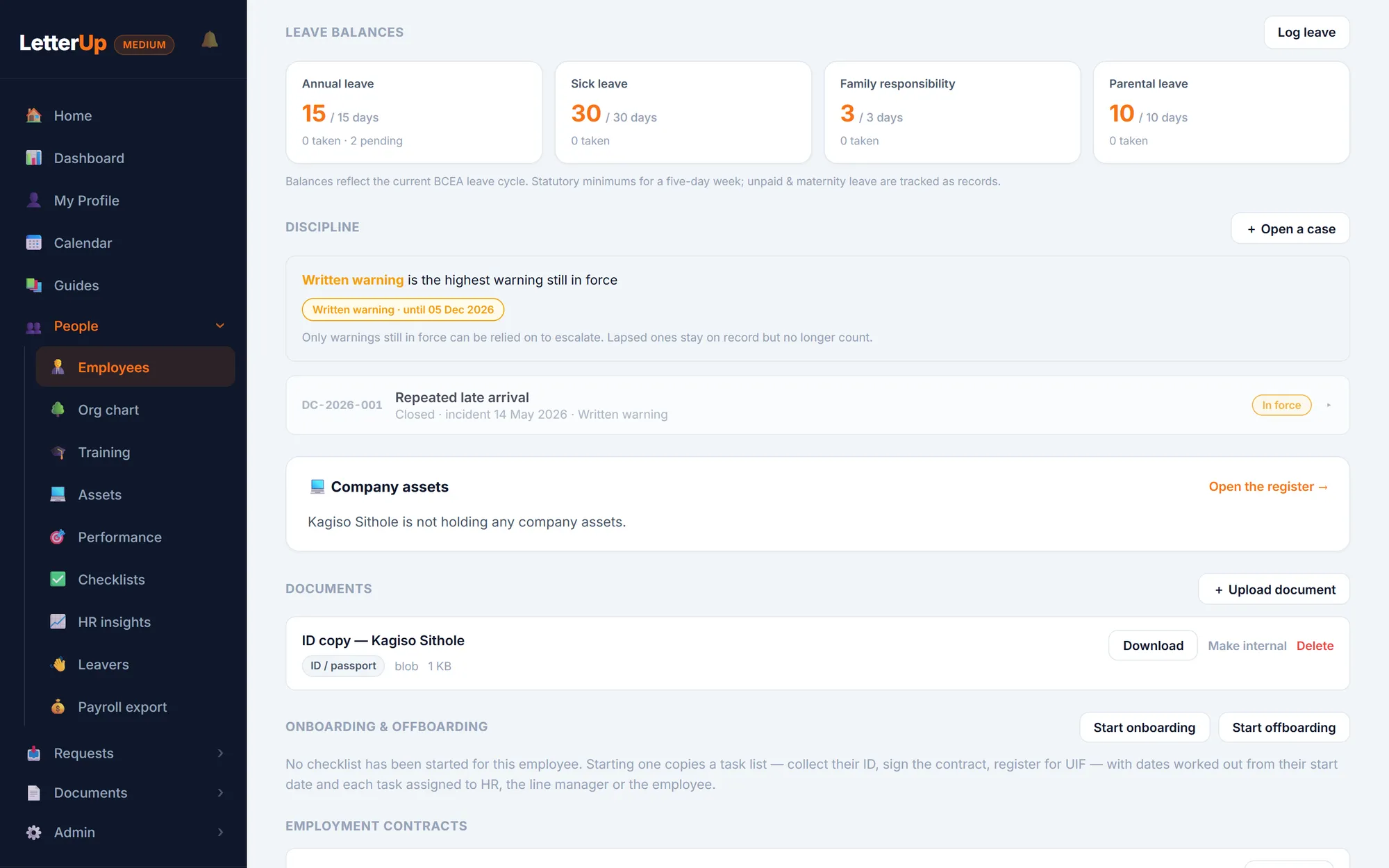
A lapsed warning cannot count
Every sanction is stored with the date it stops counting. The employee file lists the highest warning still in force, the ones that have lapsed and the permanent ones separately, because calling a dismissal "lapsed" would be wrong in both directions. Escalating to a final written warning on the strength of a warning that expired last month is the most common way a fair dismissal turns into an unfair one.
- The defaults follow ordinary South African practice: three months for a verbal, six for a written, twelve for a final written. Change them to match your own code.
- Changing your periods later never rewrites a warning already issued
- Live warnings appear on the compliance snapshot
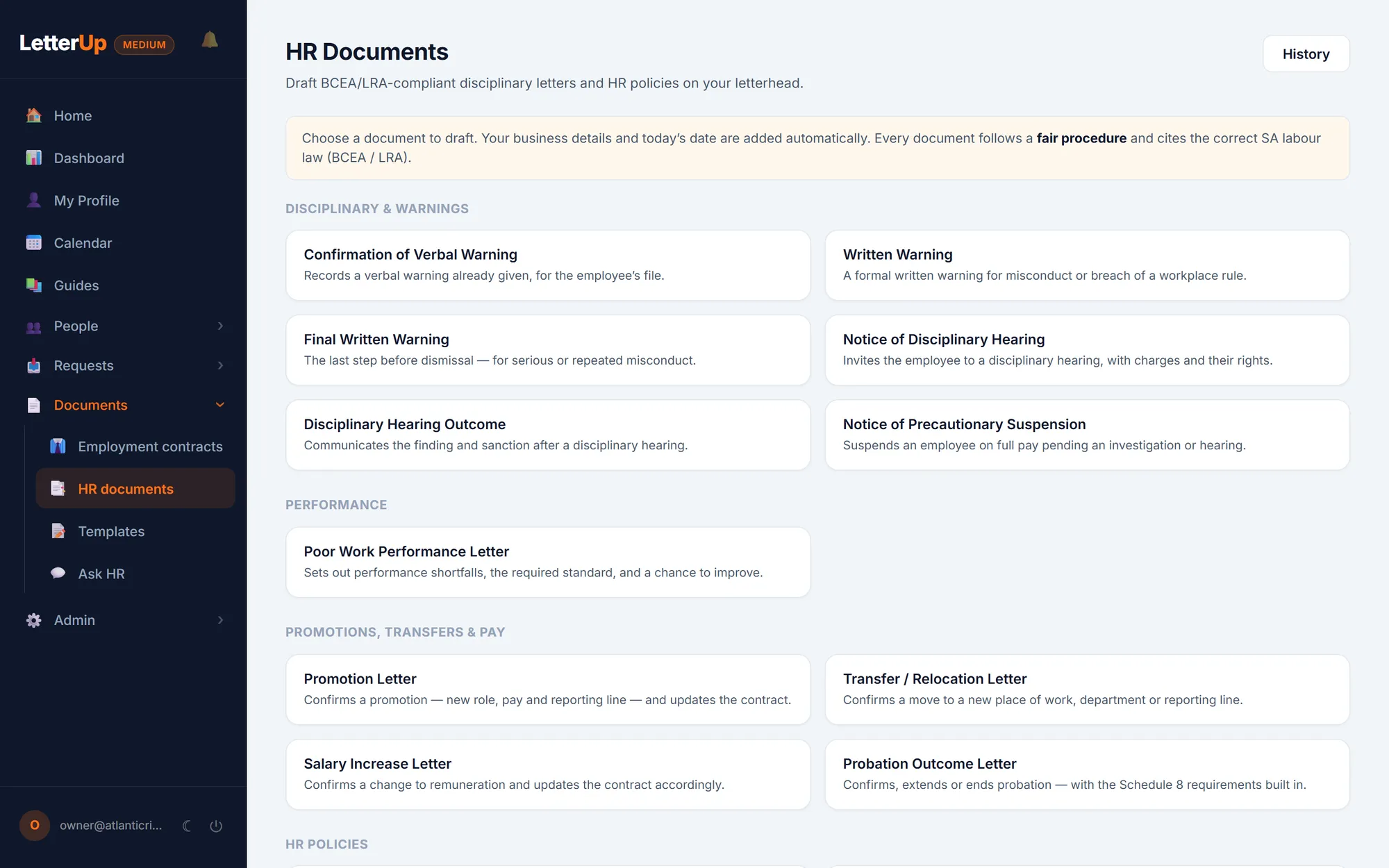
Staff see the letters, not the case file
Hearing notes and the reasoning behind a sanction are internal. The employee gets the documents they are entitled to, which are the notice of hearing and the warning itself, delivered to their own portal for signature. The portal never exposes a case.
Poor performance is handled differently from misconduct
The Code treats incapacity as its own category. Before poor performance can justify a dismissal, the employee must have been evaluated, given instruction, training, guidance or counselling, and given a reasonable period to improve. LetterUp enforces that in the performance module: a rating of 1 or 2 cannot be shared with the employee until a written support plan and a review date are attached. The software refuses to save it, so it is a gate rather than a reminder.
Open a case in the trial and draft the notice of hearing
Read what comes out, then decide.